
Avalanche could be the following Ethereum
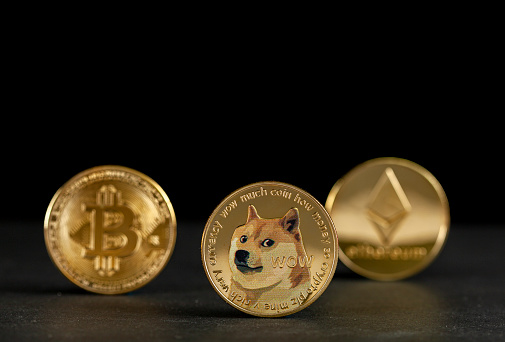
Shiba Inu (SHIB 4.85%) escalated to an all-time high in October, climbing more than 153,000,000% from its 52-week low on Nov. 28, 2020. Nonetheless, the meme token has actually since shed nearly half of its worth, showcasing how promptly the tide can turn when dealing with volatile crypto properties, specifically those backed by hype.
Naturally, some investors may see this as an acquiring chance, however, I would certainly exercise caution. The odds of Shiba Inu delivering a repetition performance are slim, to say the least. More importantly, there are more than 7,500 other cryptocurrencies to think about, as well as many of them look like better long-term financial investments.

The instance versus Shiba Inu
Allow’s solution to it. Shiba Inu does not have energy. Yes, it’s an ERC-20 token, a kind of smart agreement built on the Ethereum blockchain, which in theory implies it works with a vast range of decentralized applications (dApps) and decentralized finance (DeFi) items. Yet in practice, Shiba Inu has actually not been included right into Ethereum’s growing community, and I don’t believe that will change.
Why? There is merely nothing special regarding Shiba Inu– unless you count its popularity, yet appeal produces a bad investment thesis. Thousands of various other Ethereum-based symbols exist, and also several actually have engaging use situations. As an example, Dai is a stablecoin that intends to track the U.S. dollar, which permits capitalists to take part in DeFi items without subjecting themselves to extreme volatility.
Still not encouraged? There’s another big reason to avoid Shiba Inu. Its market price currently rests at $23.6 billion, making it the twelfth-largest cryptocurrency. Yet the leading 10 distinct Shiba Inu addresses very own 64% of that riches. If just a few of those investors determine to dump their Shiba Inu tokens, its worth would certainly implode. And also at some time, those individuals are most likely to money in.
The case for Avalanche
Avalanche (AVAX -3.57%) is a programmable blockchain, indicating it’s made to support smart contracts. If you’re new to crypto, smart contracts are just computer programs that carry out under predefined problems. In the context of the cryptocurrency market, clever agreements are generally managed and carried out by blockchains or distributed ledgers on an international scale. A lot more notably, they are the electronic minds that power dApps and also DeFi products.
Why does that issue? Blockchain innovation underpins a monetary system that works without a central authority. In the context of DeFi, that suggests individuals can obtain, profession, lend, and also conserve money without experiencing a financial institution or broker agent. And by removing those middlemen, DeFi items promise to reduce expenses as well as minimize friction related to standard financial solutions. That’s an engaging value proposition.
Certainly, Avalanche had not been the initial blockchain to support wise contracts. Ethereum uses that crown, and with around $175 billion bought DeFi products, the Ethereum blockchain is also the biggest DeFi environment by a wide margin. Yet considering that releasing in 2020, Avalanche has actually rapidly risen to the fourth area, as well as now flaunts $12.7 billion of capital secured its DeFi items. Much more significantly, the system has a side that might propel it higher.
Particularly, Avalanche is the fastest blockchain-powered smart contract platform. The network has been benchmarked at 4,500 deals per 2nd (TPS), however, it could potentially accomplish 20,000 TPS with a couple of tweaks. Crypto lovers accustomed to Solana may say that their favored blockchain network supports 50,000 TPS. That holds true, but Solana’s time to finality (i.e., the time required for a purchase to be irreversibly contributed to the blockchain) varies between 13 secs and also 46 secs, depending upon the resource. However, Avalanche transactions typically achieve finality in less than one second.
Why does this added rate matter? The Ethereum blockchain manages just 14 TPS, producing a major scalability issue. To put it simply, widespread adoption of Ethereum DeFi items might overwhelm the system, leading to slower transactions as well as greater deal costs (due to the fact that those charges are determined by the need for sources on the blockchain). In other words, Avalanche is far more scalable than Ethereum.
That brings us to the investment thesis. DeFi products aren’t free. Miners and validators must be compensated for their solutions, so individuals pay deal fees using the blockchain’s indigenous cryptocurrency. That suggests, as DeFi products on the Avalanche blockchain end up being a lot more prominent, more people will certainly have to get the cryptocurrency. Broader adoption needs to cause its cost to rise. That’s why Avalanche could make you richer in the future, as programmers embrace its ultra-fast clever agreements platform.